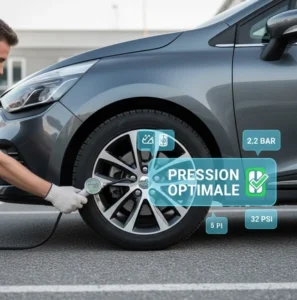

2026 Electric Car: How to Reduce Charging Costs When Renting
- A 2025 electric car is, on average, cheaper to run than an equivalent combustion engine model, thanks to charging costs being significantly lower than fuel.
- The French market saw over 365,000 electric vehicle registrations in 2024, with entry-level prices starting at around €17,000.
- Home charging remains the most economical solution; fast roaming charging is more expensive but remains competitive against petrol.
- For tourists renting a car, choosing a 2025 electric model can significantly reduce the fuel/energy budget for their trip.
- A few simple habits (off-peak hours, trip planning, model selection) can further optimize your costs.
Are you planning to rent a 2025 electric car for your trip and wondering if it’s actually more cost-effective than a traditional petrol car? The answer lies in one simple fact: recharging a battery is structurally cheaper than filling a tank, even when accounting for fast-charging rates on motorways. From purchase or rental prices to cost-per-kilometer and travel charging nuances, this guide breaks down everything a tourist needs to know in 2025 to turn the electric choice into real savings, without any surprises upon arrival.
Why electricity costs are a game-changer in 2025
The logic is as much about energy efficiency as it is about ecology. An internal combustion engine converts only about a third of the fuel energy into movement, with the rest lost as heat. An electric motor, however, offers much higher efficiency: almost all the energy stored in the battery is used to move the vehicle. For the user, the practical result is clear: for the same distance traveled, the electricity required is structurally cheaper than the equivalent petrol or diesel.
This efficiency gap explains why, in 2025, more and more rental companies are prioritizing 2025 electric models at tourist destinations: the lower cost of use allows for competitive rental rates while maintaining healthy margins, even when electricity prices fluctuate seasonally.
For a tourist, this isn’t just an ecological issue: it’s a real budgetary lever. On a one-week trip covering several hundred kilometers (traveling between sites, excursions, airport transfers), the difference between charging and filling up with petrol can represent significant savings on the overall holiday budget—money that can be reinvested in accommodation or activities. This is why, starting in 2025, rental comparison sites are highlighting “EV charging price” as a key selection criterion, much like the daily rental rate.
2025 Electric Car: Purchase Price and French Market Overview
The French electric car market has seen significant growth, with over 365,000 registrations in 2024, a trend continuing into 2025. This momentum has had a direct impact on prices: the offering has expanded and become more accessible, with electric city cars starting at around €17,000 (the Dacia Spring being the most well-known example) up to premium family SUVs exceeding €50,000.
This range of options is naturally reflected in rental fleets. Agencies now offer 2025 electric cars across several segments: city cars for urban driving, compact sedans for road trips, and SUVs for families with extra luggage. The purchase price of a 2025 electric car remains a useful benchmark even for renters, as it directly influences the rental rate: the more affordable a model is to purchase, the more competitive its daily rental price tends to be, without sacrificing range for standard tourist trips.
A serious comparison of 2025 electric cars should cross-reference three criteria: price, real-world range (often 15 to 20% lower than the advertised range when using mixed usage with air conditioning or heating), and the availability of charging stations along your planned route. For tourist use, this last point is often the most decisive, well before the vehicle’s purchase price itself.
Electric Car Charging vs. Petrol Refills: A Numerical Comparison
This is the core issue for anyone looking to truly reduce their electricity bill while traveling. Charging costs depend heavily on the location: charging at home or at your accommodation via a standard outlet is significantly cheaper than fast charging at a motorway station, where the price per kilowatt-hour is higher due to the power delivered and infrastructure fees.
In practice, three charging scenarios coexist for tourists in 2025:
- Slow or moderate charging (domestic outlet, hotel charger, destination charger): the cost per kilometer traveled remains the most advantageous, often half the cost of a petrol refill for the same distance.
- Accelerated charging at public city stations: an interesting compromise between speed and cost, ideal for lunch breaks or sightseeing stops.
- Fast charging on motorways: while more expensive per kilowatt-hour, it is generally still less costly than a traditional fuel refill for the same distance, while allowing you to get back on the road quickly.
This hierarchy explains why tourists who plan their charging (prioritizing accommodation, destination parking, off-peak hours) most effectively reduce their electricity bill throughout their stay. Conversely, relying exclusively on fast roaming charging loses some of the economic advantage, though it still remains more efficient than petrol.
Home, Travel, or Public Charging: Optimizing Every Euro Spent
For a renter, optimizing charging starts at the booking stage. Some rental companies offer 2025 electric cars with an included charging package or a card providing access to a partner charging network at preferential rates: this is a criterion to check systematically, as it can significantly impact the value for money of a rental offer.
Once on site, several habits can limit electricity costs:
- Prioritize accommodations equipped with chargers or accessible outlets, which are often free or included in the nightly rate.
- Charge during the day while sightseeing rather than in an emergency on the motorway when the vehicle is parked anyway.
- Avoid always charging to 100%: charging up to 80% is faster and more than sufficient for most daily tourist trips.
- Use charging station mapping apps to compare displayed rates before stopping, as price differences between operators can be significant.
These simple steps, combined with choosing a model with a range suited to your itinerary (rather than renting an oversized vehicle “just to be safe”), allow you to maintain the core economic advantage of electric power throughout your stay, even outside the cheapest charging windows.
Electric Car Rental for Tourists: What to Check Before Booking
Renting a 2025 electric car for a tourist trip requires slightly different preparation than a traditional petrol rental, but it is nothing complex once you have the right habits. Three points deserve particular attention.
First, real-world range versus your planned itinerary: a trip with many kilometers on motorways or in the mountains consumes more than strictly urban use, so you must size the model accordingly rather than relying solely on the technical specifications.
Second, the availability of charging stations in your destination area. Major cities and main tourist routes are now well-equipped, but some rural or island areas remain less covered: it is better to check this before booking, especially for excursions away from main roads.
Finally, the rental company’s pricing terms regarding charging: some charge for returning the vehicle with an uncharged battery, others include a package, and others offer a partner charging card at a reduced price. Comparing these conditions at the time of booking, just like the daily rental rate, prevents unpleasant surprises and allows you to truly benefit from the economic advantage of electric power throughout your stay.
Range, Maintenance, and Hidden Costs: The Long-Term Calculation
Beyond just the cost of charging, the economic advantage of a 2025 electric car also comes from less visible but very real areas. Mechanical maintenance is significantly lighter: no oil changes, fewer wear parts in the drivetrain, and regenerative braking that preserves brake pads. For a rental company, this translates to reduced fleet maintenance costs, a factor that indirectly contributes to more stable rental rates over time.
For the traveler, these structural savings are felt less directly on a short stay, but they explain why more and more agencies are pivoting toward electric: the overall economic calculation over a vehicle’s entire lifespan clearly favors this type of motorization over an equivalent combustion engine.
However, one point requires vigilance: real-world range under tourist driving conditions (air conditioning in summer, heating in winter, loaded luggage, hilly terrain) can noticeably reduce the advertised range. This parameter must be anticipated in charging plans to avoid having to rely on more expensive fast chargers, which would eat into the expected savings on the total electricity bill for the trip.
Best Practices to Further Reduce Your Electricity Bill in 2025
A few simple principles allow you to maximize the cost gap in favor of electric power throughout a stay. First, adapt your driving: smooth driving, anticipating braking to take advantage of regeneration, and controlled speeds on motorways significantly reduce electricity consumption—much like eco-driving does for a petrol vehicle, but with a proportionally larger effect on range.
Next, plan your stops: charging during a lunch break, a visit, or overnight rather than in an emergency allows you to consistently choose the cheapest charging points, avoiding motorway fast chargers reserved for true emergencies.
Finally, comparing rental offers before booking remains the most direct lever: a slightly higher rental price that includes a generous charging package can turn out to be more economical overall than a cheaper daily rate that offers no coverage for the energy consumed. By cross-referencing these elements, the choice of a 2025 electric car transforms into tangible savings on the total trip cost, rather than being just a marketing argument.
Is a 2025 electric car really cheaper to charge than filling up with petrol?
Yes, in the vast majority of cases: the superior energy efficiency of the electric motor means the cost per kilometer remains lower than petrol, even accounting for higher fast-charging rates during travel.
What is the price of a 2025 electric car in France?
Prices range from approximately €17,000 for the most accessible city cars to over €50,000 for premium family SUVs, with an increasingly wide range of options across all segments.
Where can I charge a rental electric car during a tourist trip?
The most economical options are accommodation chargers or domestic outlets; city-based accelerated chargers offer a good compromise, while motorway fast charging, though more expensive, is useful for urgent long trips.
How can I estimate the charging cost of an electric car on a tourist itinerary?
You should cross-reference the real-world range of the rented model (often lower than advertised), the planned mileage, and the type of chargers available on the route, prioritizing slow or moderate charging whenever possible.
Does renting a 2025 electric car include charging?
It depends on the rental company: some include a package or a partner charging card, while others charge for an uncharged battery upon return. This should be verified before booking.
What comparison should I prioritize for tourist use of a 2025 electric car?
A good comparison should cross-reference the rental price, real-world driving range, and charger availability at the destination, rather than limiting itself to the vehicle’s purchase price.
Is maintenance for a 2025 electric car really cheaper?
Yes, the absence of oil changes and reduced mechanical wear (regenerative braking) significantly lowers maintenance costs compared to an equivalent combustion engine vehicle.
Should I always charge an electric car to 100% before a tourist trip?
No, charging up to 80% is generally sufficient for daily trips and allows for faster recharging, while also preserving the battery over the long term.
Sources
- Abstandauto — 2025 Ranking: Top 15 Best Electric Cars
- Actu Automobile — The 10 Cheapest Electric Cars in 2025
- Que Choisir — Electric Car Comparison 2026
- Beev — 2025 Electric Car Comparison
- L’Automobile Journal — Best-selling electric cars in France, final 2025 ranking

À découvrir

Electric Car Accessories: Essential Gear for EV Owners
Discover the most essential accessories for your electric vehicle: charging cables, adapters, battery protection, and more to optimize your driving.
Charging an EV: Is it harder than refueling?
October 28, 2026
Leapmotor D19: Electric SUV with 1,000 km Range
October 31, 2026