
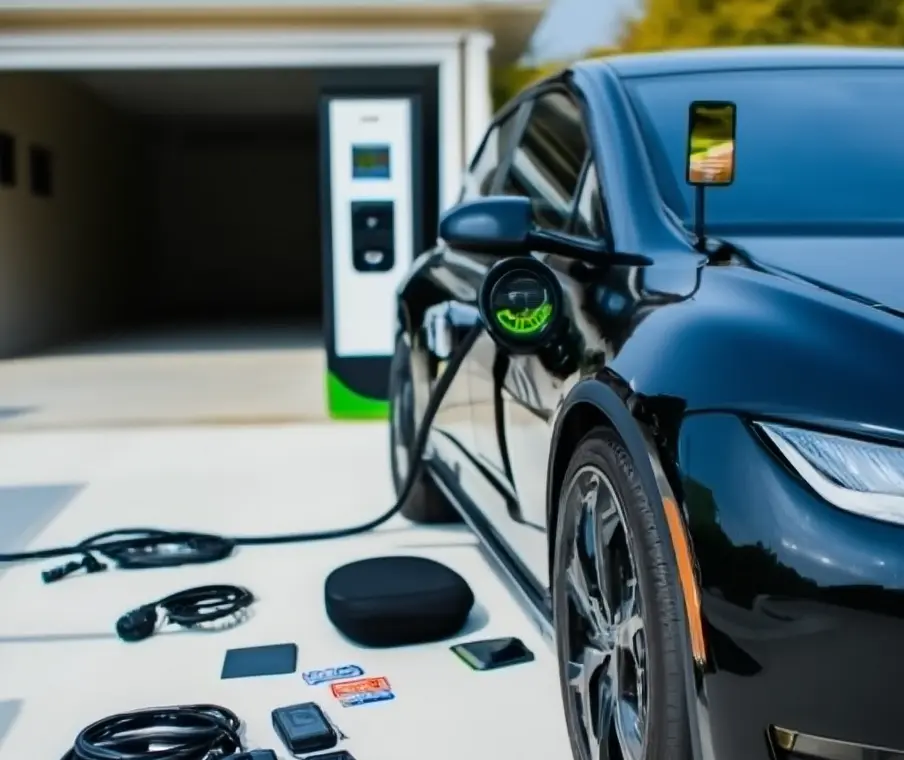
Equipping Your Electric Car: The Truly Essential Accessories
- The Type 2 cable and domestic charging adapter are the two most important accessories to purchase when buying an electric vehicle.
- 12V accessories (coolers, tire inflators, phone chargers) remain fully compatible via the standard auxiliary socket.
- A DIY electric car kit refers to a “retrofit” and follows a strict legal framework, making it very different from a simple plug-in accessory.
- Protecting the battery in winter and organizing the trunk are essential items that new owners often overlook.
- A reasonable budget to properly equip your electric car is around a few hundred euros, including the charging cable.
Have you just bought or rented an electric vehicle (EV) and are wondering which accessories you should prioritize? The answer falls into three main categories: charging equipment (Type 2 cables, domestic adapters), classic 12V accessories that are still compatible, and solutions for protecting your battery and cabin. Contrary to popular belief, equipping an electric car doesn’t require a massive budget or specialized technical skills—except when it comes to DIY conversion kits, which operate under a completely different logic. This guide reviews the equipment that is truly useful for daily life, without the marketing fluff or useless gadgets.
The Charging Cable: Your Number One Priority
The first thing you’ll need to consider when equipping an electric car is charging, and this is where many new owners find themselves unprepared. While most vehicles are delivered with a standard charging cable, it may not cover every situation: charging at a public station, charging at home via a reinforced socket, or occasional charging from a standard domestic outlet.
A Type 2 cable is the standard for connecting to the majority of public charging stations in Europe. Having your own cable ensures you aren’t dependent on the one provided by the charging station, which isn’t always available at every point. For home use, a domestic plug adapter (Mode 2) allows for slow but universal charging—useful for emergencies or when staying at a friend’s house without a dedicated installation.
Some owners also opt for a reinforced “Green’up” style socket or a wallbox, but these installations are more about electrical work than simple accessories—they require a qualified electrician. For occasional users or renters, it is better to prioritize a high-quality mobile cable rather than an expensive fixed installation. A poorly sized or low-quality cable can significantly slow down charging or even trigger safety cut-offs on older electrical installations.
12V Accessories: Still Just as Relevant
Contrary to what some might think, an electric car maintains a classic 12V circuit to power onboard electronics, lighting, and auxiliary accessories. This means that all standard 12V accessories—electric coolers, tire inflators, phone mounts with integrated chargers, and portable vacuums—remain perfectly compatible with an electric vehicle.
This is great news for drivers who feared they would have to replace everything when switching to an electric powertrain. The 12V cigarette lighter socket is generally kept in the center console, often supplemented by fast-charging USB-C ports in more recent models.
For long trips, a multi-port USB charger remains the most frequently used daily accessory, closely followed by wireless induction phone mounts that keep your dashboard clutter-free. 12V coolers are particularly useful for families on vacation or professionals transporting temperature-sensitive products, and they won’t risk draining your main traction battery since they run on the independent auxiliary circuit.
DIY Electric Car Kits: What Are They Really?
The term “DIY electric car kit” can often be confusing. It does not refer to an accessory you add to an already electric vehicle, but rather a retrofit kit used to convert an existing internal combustion engine (ICE) vehicle into an electric one. While this appeals to enthusiasts and DIYers, it is subject to a strict legal framework.
Any conversion must be carried out by a certified installer or undergo individual homologation (certification) after assembly, including an inspection by regulatory authorities. The kit itself generally includes an electric motor, a controller, a battery, and a management system, but the installation is technical and expensive—often costing several thousand euros once certification is included.
For a tourist or an individual renting or owning a standard electric car, this is not relevant; it is exclusively for owners of combustion vehicles wishing to convert them. It is important to distinguish these specialized projects from the everyday accessories covered in this guide.
Protecting the Battery and Optimizing Range
The battery is the most sensitive component of an electric car, and certain equipment can help extend its lifespan. In winter, a thermal cover for your charging cable prevents the connector from freezing in cold weather, a common nuisance in regions with harsh winters.
An external battery monitor or thermometer can also help monitor charging temperatures, though most recent vehicles already display this information on the dashboard. Some owners also invest in a smart charging scheduler, which allows you to trigger charging during off-peak hours and preserve the battery by avoiding overly frequent 100% charges.
Regarding driving habits, adopting an anticipatory driving style and using regenerative braking remains the best way to optimize range without any special accessory. For long journeys, a route planning app with integrated charging stations—often provided by the manufacturer or via third-party apps—is now considered an essential tool, almost as important as any physical accessory.
Organizing the Trunk and Cabin
Electric cars often feature a front trunk (commonly called a “frunk”) in addition to the rear trunk, which slightly changes how you organize your space compared to a traditional vehicle. This extra small space is ideal for storing the charging cable, which can be bulky and dirty, without cluttering the main trunk.
A dedicated charging cable storage bag prevents the cable from getting damaged by sharp objects or making your other luggage dirty. For families or travelers, modular trunk organizers can help compensate for the slightly reduced volume caused by the battery placement under the floor in some models.
Finally, custom-fit, waterproof floor mats protect the cabin from dirt related to frequent plugging and unplugging of cables, especially in rainy weather. These simple items, often overlooked at the time of purchase, significantly improve daily comfort and are worth integrating within the first few weeks of ownership.
Budget and Purchasing Priorities
With so many accessories available, it is best to prioritize your purchases based on how you actually use the vehicle rather than buying everything at once. The Type 2 charging cable and the domestic adapter are the top priorities, as they directly determine your ability to charge the vehicle in any situation.
Next come comfort-related accessories—USB chargers, phone mounts—which represent a modest investment but offer immediate convenience. Winter protection equipment (cable covers, floor mats) can be added based on your region and the season in which you purchase the vehicle.
As for DIY conversion kits, they only apply to a very small number of specific projects and should not be confused with standard electric vehicle equipment. For a rental tourist or a new owner, focusing on the first three categories of accessories is more than enough to fully enjoy the vehicle from the very first trip.
What is the most essential accessory for an electric car?
The Type 2 charging cable is number one, as it provides access to most public charging stations in Europe, which often do not have integrated cables.
Do standard 12V accessories work in an electric car?
Yes, the 12V auxiliary circuit is present in all electric vehicles, making standard coolers, inflators, and 12V chargers fully compatible.
What is a DIY electric car kit?
It is a retrofit kit used to convert a combustion engine vehicle into an electric one. It is subject to strict certification and is not a simple plug-in accessory.
Can I install an electric conversion kit without a professional?
While assembly is possible, final certification requires inspection by regulatory authorities or the intervention of a certified installer.
How can I protect my electric car’s battery in winter?
Using a thermal cover for the charging cable and scheduling your charging during off-peak hours can help limit the impact of the cold on the battery.
Do I need to install a wallbox to charge my electric car?
It is not mandatory: a mobile cable used with a domestic or reinforced socket is sufficient for occasional use or for renters.
Where should I store the charging cable in an electric car?
The front trunk (frunk) or a dedicated storage bag allows you to store it without dirtying your other luggage.
How much does basic electric car equipment cost?
A budget of a few hundred euros, including the charging cable, is generally enough to properly equip an electric vehicle for daily use.
Sources
- 12 Essential Electric Car Accessories
- DIY Electric Car Kit: Brands and Assembly
- DIY Electric Car Kit — Complete Guide

À découvrir
Charging an EV: Is it harder than refueling?
Is charging an electric vehicle harder than refueling? Discover the reality of charging times, home setups, and why switching to electric is easier than you thi
Leapmotor D19: Electric SUV with 1,000 km Range
October 31, 2026
Car Rental Trends: The 4th Industrial Revolution
October 28, 2026