
Paris Itineraries: Best Routes, Walks & Getaways You Can’t Miss
- A walking tour around the Eiffel Tower and the Seine allows you to discover major monuments in half a day without needing transport.
- Cycling routes around Paris (Coulée verte, greenways to Versailles, or the Chevreuse Valley) are suitable for all skill levels.
- Numerous getaways near Paris by train or RER (less than an hour away) allow you to escape the city without a car.
- The choice of itinerary depends mainly on your travel profile: couples, families with children, or groups of friends.
- Renting a car remains the most flexible solution to combine multiple getaways in a single day or to explore the surroundings at your own pace.
Are you looking for an itinerary around Paris, whether to explore the capital on foot, pedal along the Seine, or escape to the Île-de-France countryside for a weekend? The best option depends on your available time and mode of transport: a 3 to 5-hour walking tour is enough to connect the Eiffel Tower, Trocadéro, and Champ-de-Mars, while a nearby getaway by train (Fontainebleau, Chantilly, Giverny) requires half a day to a full day. For families or couples wanting to visit several sites without being tied to train schedules, a rental car offers a level of freedom that public transport doesn’t always provide, especially when reaching less accessible sites like the Chevreuse Valley or certain villages around Fontainebleau. This guide details the main itinerary options: on foot within Paris, by bike in and around the city, by public transport for short getaways, and by car for wider day trips.
Walking Tours Around the Eiffel Tower: The Classic Route
The most sought-after route is the one connecting the iconic monuments around the Eiffel Tower. A classic path starts at Trocadéro, where the Palais de Chaillot offers the most photographed view of the Eiffel Tower and the Champ-de-Mars. From there, head down toward the Pont d’Iéna, cross the Seine, and walk along the Champ-de-Mars toward the École Militaire. From there, you have two options: head up toward Les Invalides and the Rodin Museum, or veer toward Quai Branly and the Seine riverbanks, which are beautifully laid out for strolling.
This circuit can be completed with 2.5 to 3 hours of leisurely walking, or longer if you plan to stop in the Trocadéro gardens or climb to the top of the tower. It is easily extended toward Alma-Marceau and the Champs-Élysées for those with an entire day to spare.
For visitors staying outside the center, particularly in the 15th arrondissement, an itinerary around the Paris 15 district allows you to reach the Eiffel Tower on foot via Rue Saint-Charles or Parc André-Citroën, passing through the Beaugrenoble neighborhood and the riverbanks. This route, which is less touristy, passes through typical residential neighborhoods before opening up to the Champ-de-Mars—an interesting alternative for those looking to avoid the crowds at Pont d’Iéna during peak hours.
The best time for this type of walk is early in the morning or late in the afternoon, when the light hits the Seine beautifully and tour bus groups haven’t yet invaded Trocadéro.
Cycling Routes Around Paris: From the City to the Great Outdoors
Cycling itineraries around Paris vary depending on your preference and skill level. Within the city, the developed Seine riverbanks and the Coulée verte René-Dumont (an old railway line transformed into an elevated promenade running from Bastille to Bois de Vincennes) provide an accessible starting point for everyone, with no steep hills and plenty of protection from traffic.
For those wanting to leave Paris, several greenways radiate toward the outskirts. The Paris-Versailles bike route largely follows the old Petite Ceinture railway line and the riverbanks before reaching the Palace via the Bois de Meudon; this is a journey of approximately 25 km one way, doable in half a day for a regular cyclist. To the south, the Chevreuse Valley offers a network of more hilly cycling paths, perfect for a sporty full-day outing with a picnic in the Cernay valleys.
Cycling around Paris requires different planning than walking: arrange for local bike rentals (Vélib’ for intra-muros Paris, or specialized rental shops for longer routes), check schedules if you plan to take your bike back by train, and aim for weekends when the main roads are quieter. For families with young children, it is better to stick to the Coulée verte or the banks of the Marne, which are flatter and more secure than the routes leading to the larger forested areas.
Day Trips Near Paris by Train or RER
For a getaway near Paris by train, several destinations are reachable in less than an hour without a car. Versailles is accessible in 35 to 40 minutes via the RER C from central Paris stations, making it the easiest day trip. Chantilly, with its castle and gardens, can be reached from Gare du Nord in about 25 minutes. Further afield, Fontainebleau (about 40 minutes from Gare de Lyon, then a bus or a walk to the castle) and Giverny (train to Vernon followed by a shuttle or bike) require a full day but are perfectly doable as a round trip.
The RER remains the most economical solution for a getaway near Paris by RER, particularly to Disneyland Paris (RER A), Saint-Germain-en-Laye (also RER A, featuring its castle and a terrace with views over Paris), or Vincennes and its forest. These trips do not require reservations and offer great scheduling flexibility, a real advantage for an impromptu outing.
The limitation of the train becomes apparent as soon as you want to combine two sites in the same day or explore less accessible villages: connections increase travel time, and certain rural tourist sites (vineyards, small chateaus, classified villages) are simply not accessible without a car. This is where a rental car makes perfect sense, especially for tourists already staying far from a major station or those who want to hit several stops in one outing.
Romantic or Family Getaways: Tailoring Your Itinerary
The ideal itinerary changes depending on who is traveling. For a romantic getaway near Paris, preferred destinations focus on atmosphere rather than activity density: Giverny and Monet’s gardens, Auvers-sur-Oise and its Impressionist charm, or a stroll through the vineyards of the Marne Valley in the Champagne region, just over an hour’s drive away. A dinner in a village like Barbizon, known for its artist studios, perfectly completes a romantic day without needing a long night drive back.
For a family getaway near Paris, the criteria change: you look for activities that keep children engaged throughout the trip. The Château de Vaux-le-Vicomte with its park and seasonal falconry shows, the Fontainebleau estate with its forest ideal for play and bouldering for older kids, or days at Disneyland Paris (Marne-la-Vallée) are among the most popular choices. These sites generally have on-site parking, making a car particularly practical when traveling with young children, strollers, or extra gear.
In both cases, the choice of transport depends mainly on the return distance and the fatigue accumulated during the day. Renting a car for the day or the weekend allows you to adjust your itinerary in real-time: extend a visit, stop in an unexpected village, or return earlier without depending on the last train schedules.
Driving Around Paris: Planning a Multi-Day Road Trip
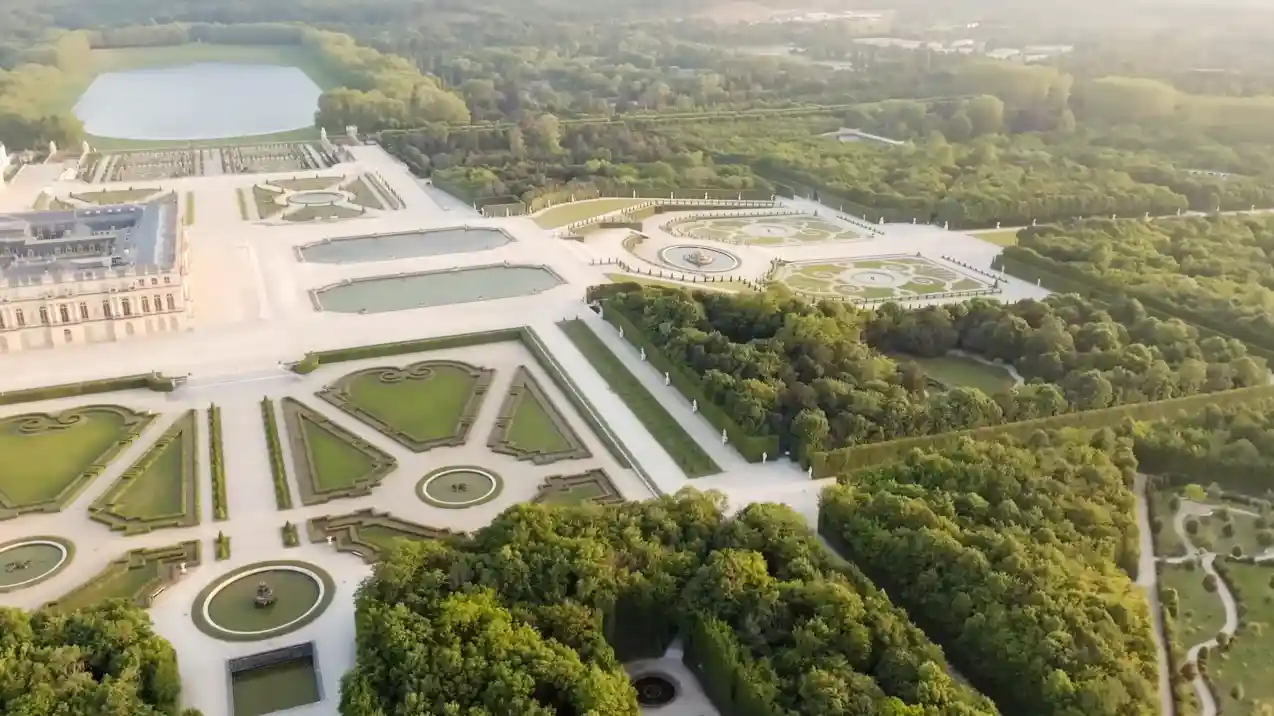
For a full weekend, a driving route around Paris allows you to link several destinations without having to pass back through the capital between each stop, unlike the train which often forces you back to a central hub. A typical two-day circuit might head west: Versailles on the first morning, Saint-Germain-en-Laye for lunch, then an overnight stay near Giverny before joining the loops of the Seine in Normandy the next day.
Toward the southeast, another circuit around Paris connects Fontainebleau, Vaux-le-Vicomte, and Provins (a medieval town classified as a UNESCO World Heritage site)—three sites just 20 to 40 minutes apart by car, but very poorly connected by public transport. This is exactly the kind of circuit where a rental car is a game-changer: a train journey between these three cities would require multiple connections and nearly half a day of travel, compared to just an hour and a half of total driving time.
A well-constructed plan around Paris takes into account the opening hours of castles and gardens, which are often closed on Mondays, as well as traffic when leaving Paris during peak hours (aim to depart before 9:00 AM or after 10:30 AM). For those coming from abroad and picking up their vehicle directly at the airport, it is advised to plan the first leg of the circuit relatively close to the departure airport to limit driving time on the arrival day, which is often marked by jet lag and flight fatigue.
Practical Tips for Planning Your Paris Itinerary
A few practical benchmarks can help you choose the right format. For an outing of less than 4 hours within Paris itself, walking or cycling is more than sufficient and avoids parking constraints, which are often the main downside of driving in the city center. For a half-day to full-day trip to a single well-served site (Versailles, Chantilly), the RER or train remain the simplest and cheapest options.
As soon as your itinerary includes multiple stops in one day, or a destination poorly served by rail, a rental car becomes the most efficient solution. It is useful to reserve your vehicle a few days in advance during high season (spring and summer), a period when demand around Paris increases significantly, especially for long weekends. Also, check the parking conditions at your destination: some tourist villages like Provins or Barbizon have dedicated parking lots on the outskirts of the historic center, which are preferable to searching for a spot in narrow central streets.
Finally, for trips combining highways and small country roads, an up-to-date GPS or an offline app helps avoid surprises in rural areas where network coverage can be limited, particularly in parts of the Fontainebleau forest or the Chevreuse Valley.
What is the best walking itinerary to see the Eiffel Tower and its surroundings?
The Trocadéro – Pont d’Iéna – Champ-de-Mars – École Militaire – Invalides circuit takes 2.5 to 3 hours and covers the main viewpoints of the Eiffel Tower.
What are the best cycling routes around Paris?
The Coulée verte René-Dumont in Paris, the Paris-Versailles cycle route (about 25 km), and the Chevreuse Valley trail network are among the most popular routes depending on your desired level.
Can you do a getaway near Paris by train without a car?
Yes, Versailles, Chantilly, Saint-Germain-en-Laye, or Fontainebleau can be reached by train or RER in 25 to 40 minutes, with no reservation required for most of these trips.
Which getaway should I choose for a romantic trip near Paris?
Giverny, Auvers-sur-Oise, or a village like Barbizon offer a calm setting perfect for couples, all accessible in less than an hour and a half.
Which destination is best for a family getaway near Paris?
Vaux-le-Vicomte, the Fontainebleau forest, or Disneyland Paris remain the best choices for children, with on-site parking making access by car easy.
Do you need a car to visit the outskirts of Paris?
Not necessarily for a single site well-served by train, but it becomes useful as soon as you want to visit multiple sites in one day or reach villages that are difficult to access by public transport.
Which route should I take from the 15th arrondissement to reach the Eiffel Tower?
A walk via Rue Saint-Charles or Parc André-Citroën toward the riverbanks allows you to reach the Champ-de-Mars while avoiding the crowds at Pont d’Iéna.
How can I build a multi-day circuit around Paris?
By grouping sites by geographic zone (west toward Versailles-Giverny, southeast toward Fontainebleau-Vaux-le-Vicomte-Provins) to minimize travel time between stops—a format that a rental car makes much easier than the train.
Sources
- Walking ideas in Paris, by theme and neighborhood – Paris je t’aime
- Paris Map: Paris (75000) map and practical info – Mappy

À découvrir
Driving in Paris: ZFE, Parking & Expert Tips
Comprehensive guide to driving in Paris: ZFE zones, traffic limits, parking, and essential tips for your trip.
Road Cracks & Bumps: Impact on Tires and Shock Absorbers
November 8, 2026
Emerald Coast Route: 80km Itinerary & Brittany Landscapes
November 3, 2026