

One-way car rental: how does it work?
- A one-way rental allows you to pick up a vehicle at one agency and return it to another without returning to your starting point.
- This service applies to cars, vans (12 to 20m³), and certain trucks, with different conditions depending on the vehicle type.
- The price generally includes a drop-off fee (sometimes called a “one-way fee”), which varies based on distance and the imbalance between the two agencies.
- Major brands (Europcar, ADA) and van specialists offer this service, but not all agencies allow it for all destinations.
- Comparing multiple rental companies and booking in advance can often significantly reduce the extra cost of the one-way trip.
A one-way car rental, also known as a “different return rental,” allows you to rent a vehicle in one city and return it in another without going back to the original agency. The principle is simple on paper: you choose a pick-up agency and a drop-off agency at the time of booking, and the rental company calculates a rate that includes, in addition to the standard rental price, fees related to the geographical imbalance created by this one-way journey. This rental method is available for passenger cars, vans (12 to 22m³), and certain trucks, with rules and costs that vary significantly depending on the type of vehicle, the distance between the two agencies, and the time of year.
The basic principle: pick up here, drop off elsewhere
In practical terms, a one-way rental works like a standard rental regarding paperwork, security deposits, and the vehicle inspection at the start. The difference lies solely in the return location: instead of returning to the pick-up agency, you drop the vehicle off at a different agency, sometimes in another city, region, or even another country, depending on the rental provider.
This mechanism meets specific logistical needs: moving house, a one-way trip between two airports for a trip with no return, or an open-loop tourist route (for example, arriving in Nice and departing from Marseille). The rental company, for its part, must return the vehicle to its starting point or integrate it into another agency within its network, which generates a logistical cost that it passes on to the customer via drop-off fees.
These fees depend on several factors: the mileage distance between the two agencies, the imbalance of demand (a destination that is highly requested for one-way trips in one direction but not the other will cost more), and the availability of the same type of vehicle at the drop-off agency. A one-way trip between two large, well-connected cities is generally cheaper than a trip to a remote agency, as the rental company can more easily reallocate the vehicle.
It is useful to know that some rental companies occasionally waive drop-off fees when the trip helps meet their fleet repositioning needs: in such cases, the one-way rate may even be lower than a standard round-trip rental for the same duration.
One-way car rental: terms and availability
For passenger cars, one-way rentals are offered by most major rental brands, including Europcar, which allows you to pick up and drop off vehicles at different agencies based on network availability. The process remains identical to a standard rental: choosing the vehicle category, deductible/excess, insurance options, but with an additional field at the time of booking to specify the return agency.
The availability of this service depends heavily on the pair of cities chosen. Trips between major metropolitan areas or between international airports are generally well-covered, with reasonable drop-off fees. Conversely, a one-way trip to a small rural agency or an underserved area may be refused, or charged at a significantly higher rate, due to insufficient return demand to balance the rental company’s fleet.
For tourists, this type of rental is particularly useful for an open-loop tour: arriving at one airport, visiting several regions, and departing from another point without having to backtrack. This is the typical scenario for a road trip between several cities in the same country, where the car is picked up upon arrival and returned just before the return flight, in a different city.
A point to watch: the vehicle category reserved must be available at both the pick-up and the drop-off locations. Some rental companies therefore require an identical or equivalent category between the two agencies, which can limit your choices compared to a standard rental.
One-way van rental: the moving house case
One-way van rentals primarily serve the logic of moving house: you load the van in one place, unload it at your destination, and it would be absurd to drive the empty vehicle all the way back. This is precisely the niche occupied by specialists like ALLEZ-SIMPLE.COM, which offers 12 to 22m³ vehicles dedicated exclusively to this type of journey, with unlimited mileage and tolls included in the package.
Generalist brands like ADA or Europcar also offer this service for their utility range, from 3 to 20m³ depending on your needs (studio, small apartment, large house). The process differs slightly from passenger cars: one-way van rates are often displayed as an all-inclusive package (vehicle, mileage, tolls), rather than a standard daily rate plus drop-off fees, because the journey is usually completed in one go without intermediate steps.
The availability of a 20m³ one-way van for a large move is more limited than for smaller models, as these vehicles are less numerous in rental fleets. Therefore, it is recommended to book several weeks in advance, especially during periods of high demand (end of the month, summer season), which correspond to peak moving periods.
Another specific feature: unlike a car, a one-way van is not intended to return to the starting point within a short timeframe, which is why some rental companies limit possible destinations to a predefined network of partner agencies, rather than accepting any custom route.
One-way truck rental: a more niche market
For larger tonnage trucks (beyond the simple 20m³ van), one-way rental exists but remains a more restricted market than cars or light utility vehicles. These vehicles often require a specific driver’s license and are less common in consumer rental networks, which mechanically limits the available destination pairs.
In this segment, the rental company must anticipate the repositioning of the truck with even more precision than a light van, as the cost of driving empty is proportionally higher. Drop-off fees can therefore represent a significant portion of the total price, especially over long distances or toward areas poorly served by the rental company’s network.
In practice, an individual or professional in need of a one-way truck should find it beneficial to compare offers from moving specialists rather than generalist rental companies, as the latter rarely offer this format beyond the 20m³ van. It is also useful to check if the planned route corresponds to a natural repositioning axis for the rental company (for example, a heavy flow between two major cities), which can significantly lower the price compared to an atypical route.
How to find cheap one-way rentals
The price of a one-way rental, whether it is a car, a van, or a truck, essentially depends on three elements: the distance between the two agencies, the balance of demand on that route, and the booking period.
Several practical levers can help reduce your bill. First, book as early as possible: one-way rates are often dynamic and increase as the departure date approaches, especially for vans during peak demand periods. Second, prioritize trips between well-connected major metropolitan areas, where competition between rental companies and fleet balance allow for lower, or even zero, drop-off fees on certain routes.
Comparing multiple brands remains essential, as pricing policies vary greatly from one provider to another for the same route: a one-way trip might be offered without a surcharge by a rental company that specifically needs to reposition vehicles on that route, while costing dozens of euros more with a competitor. Finally, for vans, one-way moving specialists sometimes offer all-inclusive packages that are more advantageous than generalists for long-distance trips, notably thanks to unlimited mileage integrated into the base price.
It is also advised to remain flexible with your dates if possible: shifting your pick-up by a few days may be enough to switch to a significantly lower rate when the trip better matches the rental company’s repositioning needs at that time.
Things to check before booking
Before confirming a one-way booking, several elements deserve careful verification to avoid unpleasant surprises. The exact amount of the drop-off fee must be clearly displayed before payment: some comparison sites only show a base rate and add the one-way surcharge at the next step, which can distort comparisons if you only look at the initial price shown.
The availability of the vehicle category at the drop-off agency is another sensitive point: some rental companies guarantee the reserved model, while others only guarantee an equivalent category, which can affect the comfort of your journey, especially for a van where available volume is crucial.
You should also check the opening hours of the return agency, particularly for international trips or for small agencies with more restricted hours than those in city centers. Dropping off a vehicle outside of opening hours may result in additional fees or require a non-staffed return procedure (key box, mobile app), which is not offered by all rental companies.
Finally, insurance and deductible conditions deserve special attention for this type of rental: a vehicle inspection is generally performed at the drop-off agency, sometimes by a different team than the one at pick-up, which makes it even more important to photograph the vehicle and report any pre-existing damage as soon as you pick it up.
What is a one-way car rental?
It is a rental where the vehicle is picked up at one agency and returned to another, without returning to the starting point, usually for a fee calculated based on distance and demand for the route.
Is a one-way rental more expensive than a standard rental?
Generally, yes, due to the drop-off fees, but the gap varies greatly depending on the route: on a route with high demand in both directions, the surcharge can be minimal or even zero.
Can I rent a one-way van for a long-distance move?
Yes, this is the primary use of this service: specialized rental companies offer 12 to 22m³ vans for one-way trips, with unlimited mileage and tolls included in the package.
Is there such a thing as a 20m³ one-way rental?
Yes, one-way van ranges generally go up to 20 or 22m³ with major rental companies and moving specialists, but the availability of this size is more limited than standard-sized vans.
How can I find cheap one-way rentals?
You should book early, compare several rental companies for the same route, and prioritize routes between major cities where demand is balanced in both directions, which reduces drop-off fees.
Can I rent a truck one-way?
Yes, but the selection is more limited than for cars or light vans, because heavy-duty trucks are less numerous in rental networks and often require a specific driver’s license.
Is it possible to return the vehicle to a different agency in all cities?
No, it depends on the rental company’s network and its fleet balance: some trips to small, underserved agencies may be refused or heavily surcharged.
Do I need a specific contract for a different-return rental?
No, the contract remains similar to a standard rental, with an additional field specifying the return agency and, often, a dedicated line for the one-way fee.
Sources

À découvrir
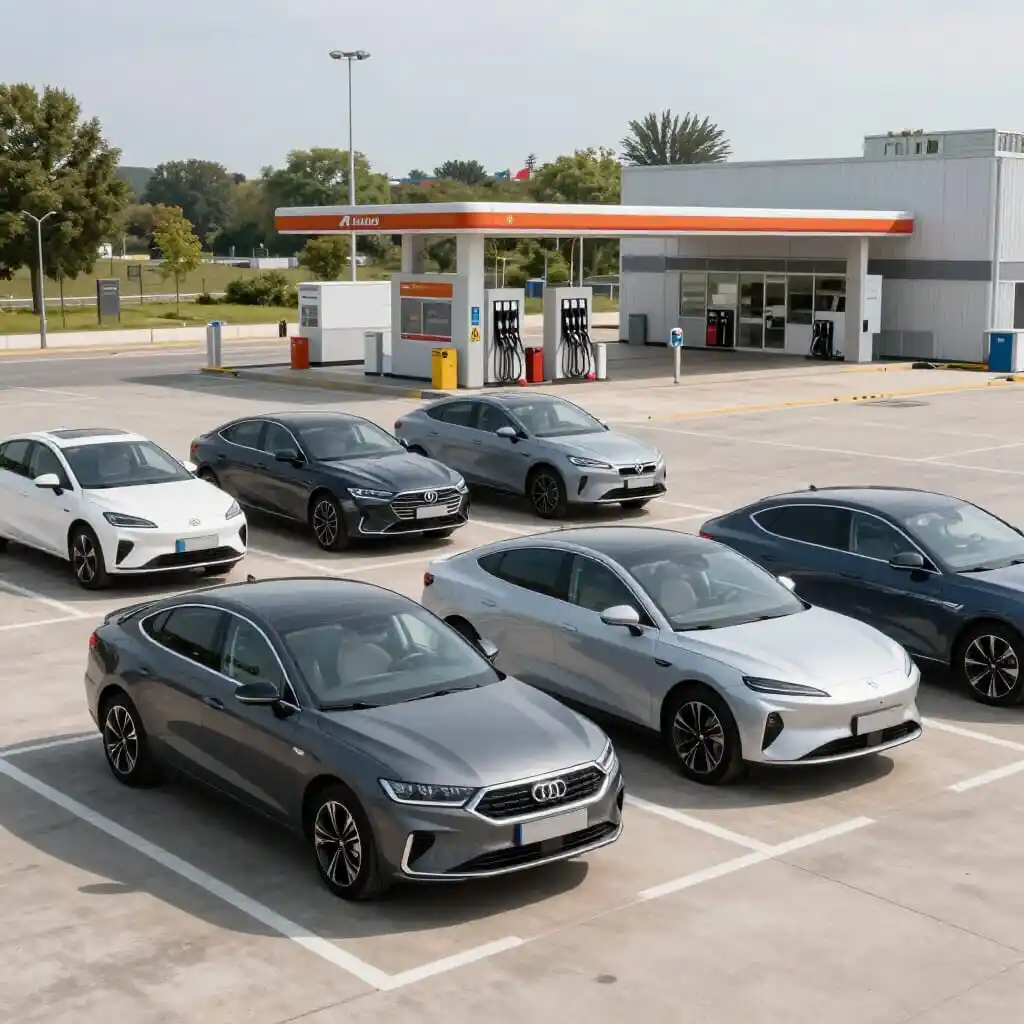
Which Engine to Rent? Petrol, Diesel, Hybrid, or Electric
Petrol, diesel, hybrid, or electric: discover which engine to rent based on your mileage, budget, and charging needs.

Nice Airport Car Rental 2026 | Complete Practical Guide
November 12, 2026
Car Rental in Lyon: Complete Guide & 2026 Rates
November 11, 2026