
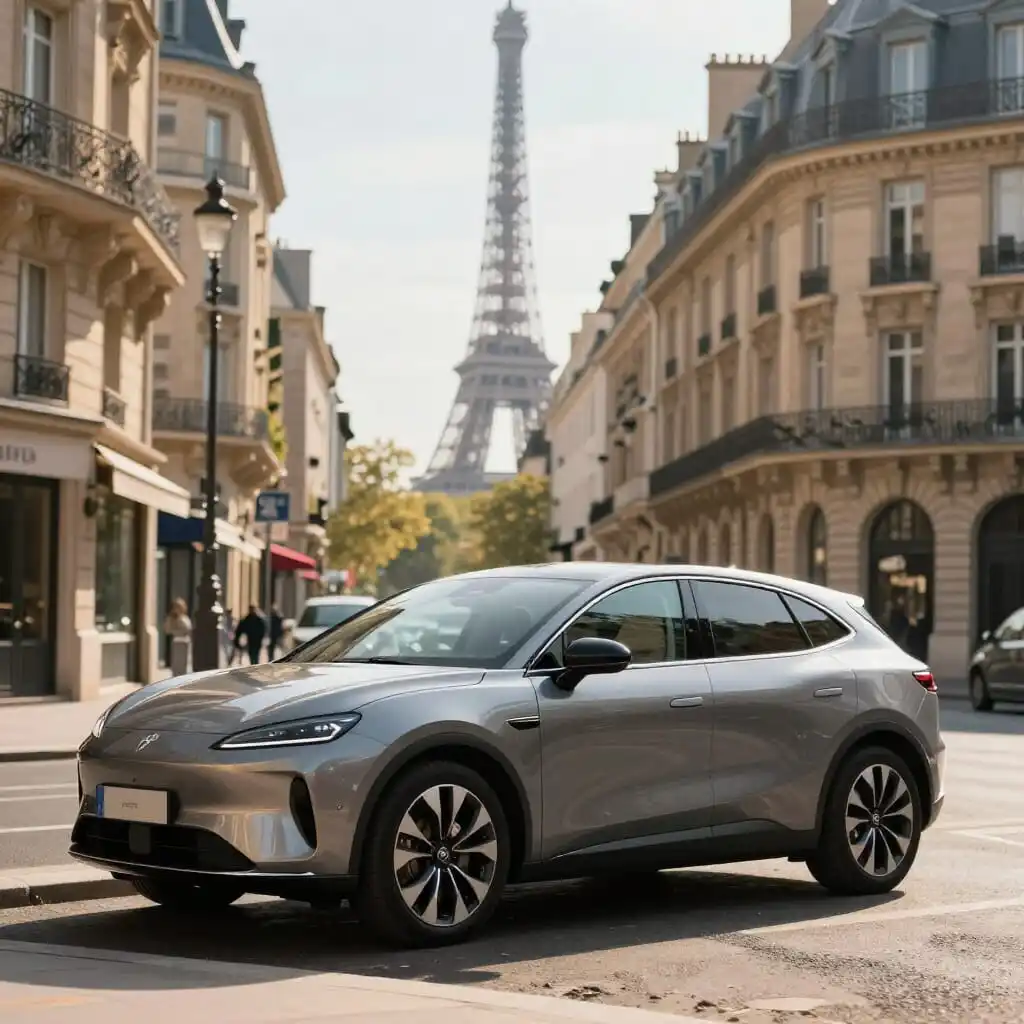
Car Rental in Paris: Prices, Tips, and Best Practices
- Prices vary significantly by district: Agencies near major train stations (Gare de Lyon, Gare du Nord) and airports charge higher rates than those in the outskirts.
- Comparison is key: Comparing multiple providers before booking can often cut your rental cost in half for the same vehicle category.
- Unlimited mileage is not guaranteed: Always check the terms and conditions before signing, especially for multi-day trips.
- Peer-to-peer rental (Getaround and similar): This is a highly credible alternative to traditional agencies for short city trips.
- The return inspection is the most critical moment: Photographing the vehicle from every angle prevents unpleasant surprises on your final invoice.
Renting a car in Paris costs, on average, between €25 and €60 per day for a city car, depending on the season, the district, and the provider chosen. Prices rise significantly around train stations and airports, while agencies located further out or peer-to-peer offers often allow you to pay half the price. This guide details price ranges by area, pitfalls to avoid (limited mileage, insurance excess, hidden fees), and best practices to secure cheap car rental in Paris without any unpleasant surprises when returning the vehicle.
How much does car rental in Paris cost?
The cost of renting a car in Paris depends on three main factors: vehicle category, rental duration, and seasonality. For a city car (such as a Citroën C3 or Renault Clio), expect to pay generally between €25 and €45 per day during the off-season, rising to €60–€70 during peak periods (July–August, May long weekends, or professional trade shows). A sedan or compact SUV will increase the bill to €50–€90 per day depending on the provider.
Duration also plays a significant role: traditional rental companies like Europcar or Hertz apply discounted rates for rentals of 3 days or more, and the daily price drops even further for a full week. Conversely, a 24-to-48-hour rental remains proportionally more expensive, as the same fixed costs (cleaning, vehicle preparation) are spread over fewer days.
The type of agency also influences your budget. International brands (Hertz, Europcar, Sixt) offer comprehensive services including 24/7 assistance, but at a higher price point than local renters or comparison platforms. Comparison sites like Kayak or Auto Europe allow you to view multiple offers for the same vehicle and date, helping you spot significant price differences between two agencies located just a few hundred meters apart. Finally, additional fees (young driver surcharges, additional drivers, baby seats, GPS) can add 20% to 30% to the total booking amount if they are not planned for in advance.
Car rental prices in Paris by arrondissement
The pickup location directly influences the final price, sometimes more than the vehicle category itself. Areas with high tourist density and strategic transit hubs show higher prices, while the outskirts remain more affordable.
Train stations and airports (8th, 10th, 12th, 19th arr.): Agencies located near Gare de Lyon, Gare du Nord, or Gare de l’Est often apply a 10% to 20% markup compared to a standard city-center agency due to high demand and location fees (airport or station surcharges applied by some providers).
Historic center (1st, 4th, 6th, 8th arr.): Rates remain high here due to real estate costs and the tourist clientele, but the advantage is immediate proximity to major sites, which can offset the extra cost if you only need the car once to leave the city.
Peripheral districts (13th, 18th, 19th, 20th arr.): This is generally where you will find the best deals, with local agencies or peer-to-peer rental points offering rates 20% to 40% lower than the center, just a 15–20 minute metro or taxi ride away.
Airports (Roissy-CDG, Orly): Beyond the Paris city limits, prices at airports are generally higher than in the city center due to airport taxes imposed on rental companies, which are passed on to the customer. If your stay in Paris doesn’t require a car immediately upon arrival, it is often more economical to rent a vehicle in the city on the day you actually need it rather than at the airport exit.
How to find cheap car rental in Paris: Practical tips
Reducing the cost of a car rental in Paris relies on a few simple habits that are often overlooked by travelers in a hurry to book.
Book in advance rather than last minute. Prices rise mechanically as availability decreases, particularly on weekends and during school holidays. Booking 2 to 3 weeks before your departure generally allows you to access the lowest rates from a given provider.
Compare before you book. The price gap between agencies for the same model and dates can reach several dozen euros per day. A comparison tool allows you to see all available offers on a single page rather than checking each rental site separately.
Avoid station or airport pickup points if possible. As mentioned above, these locations include site fees that are passed on to the rental price, whereas an agency just a few metro stops away may offer the same vehicle without this markup.
Choose an appropriate vehicle category, not an oversized one. A city car is more than enough for driving and parking in Paris, where streets are narrow and parking is scarce. An SUV or minivan costs more to rent, consumes more fuel, and makes parking in dense areas more difficult.
Verify additional fees before confirming. GPS, child seats, additional drivers, supplemental insurance: each of these elements is added to the initially displayed price. Some providers show an attractive base rate that climbs quickly once these options are added, which is why it is vital to read the full summary before paying.
Cheap car rental in Paris with unlimited mileage: What to check
Unlimited mileage is often a deciding factor for tourists planning excursions outside of Paris (Versailles, the Loire Valley, Normandy). Contrary to popular belief, this option is not systematically included in the base rate, even with major brands.
Many “cheap car rental in Paris with unlimited mileage” offers actually impose a daily cap (often 200 km/day on car-sharing platforms like Getaround), beyond which a per-kilometer rate applies. For a round trip from Paris to Versailles or Fontainebleau, this cap is usually sufficient. However, for a multi-day road trip to Normandy or the Loire Valley, it is essential to check this detail before booking, or you may see your final bill increase significantly.
Some traditional rental companies offer unlimited mileage as a paid option to be added to the base rate, while others include it by default in certain premium packages. The rule to remember: never rely solely on the price shown on a comparison site’s homepage; always open the offer details to check the mileage terms. A seemingly very low rate might hide a restrictive mileage cap, ultimately making the offer more expensive than an alternative with a slightly higher price but truly unlimited mileage.
Peer-to-peer car rental in Paris: A credible alternative
Peer-to-peer car rental in Paris has grown significantly in recent years, driven by platforms like Getaround that allow you to rent a vehicle directly from an owner without visiting an agency. The concept: the vehicle is parked on a street or in a local parking lot, and you unlock it via a mobile app, with no physical key handover or queues.
This format offers several advantages for tourists on short stays. First, flexibility: you can rent for just a few hours, something rarely offered by traditional agencies that usually charge a minimum of one full day. Second, proximity: vehicles are scattered throughout all arrondissements, avoiding a trip to a remote agency. Finally, price: insurance and a daily mileage allowance are often included in the displayed price, with no hidden fees at checkout.
The trade-off is less availability of recent models or specific categories (vans, minivans) compared to a traditional agency, and generally less robust customer service in the event of a breakdown or road incident. For occasional city use or a one-day excursion, peer-to-peer rental remains a highly relevant option that should always be compared with traditional rental offers before deciding.
Insurance, excess, and vehicle inspection: Key points to watch
Insurance is often the most misunderstood aspect of car rental for tourists. The basic contract included in the displayed price generally covers mandatory third-party liability, but leaves the renter responsible for an “excess” (deductible) that can reach several hundred, or even over a thousand, euros in the event of damage to the rented vehicle. Rental companies systematically offer supplemental insurance to reduce or waive this excess for an additional daily fee.
Before purchasing this option directly from the rental company, it is useful to check if your credit card (especially premium cards) or your home insurance already includes car rental coverage, which can sometimes help you avoid double-paying.
The vehicle inspection (état des lieux), both at departure and return, is the most sensitive part of the transaction. It is highly recommended to photograph the entire vehicle (bodywork, rims, interior, odometer, and fuel level) before leaving the agency, and to keep these photos until the vehicle is officially returned. In the event of a dispute over a scratch or contested damage, these photos are your only tangible proof against the rental company. Similarly, returning a car with less fuel than originally provided is billed at a rate often much higher than the price at the pump, so it is wise to refill just before returning the car.
Driving and parking in Paris with a rental car
Paris was not designed for individual cars, and this reality must be taken into account before booking a vehicle for an entire stay. Traffic in the central districts is heavy, restricted driving zones (ZFE/Crit’Air) are increasing, and street parking is both rare and expensive in most tourist neighborhoods.
For a tourist, the most effective strategy is often to rent a vehicle only for the days it is truly necessary (excursions outside Paris, transporting luggage to an outlying accommodation) and to prioritize public transport for travel within the city. This helps reduce both the total cost of the rental and the difficulty of finding a parking spot in dense areas.
When a car must remain parked for several days, it is better to identify a secure parking garage in advance rather than relying on street parking, which is often unavailable or carries high daytime rates. Some rental companies offer partnerships with parking garages near their agencies; this is information you should request directly when booking.
What is the average price for a one-day car rental in Paris?
On average, expect between €25 and €45 per day for a city car during the off-season, and up to €60–€70 during peak season or long weekends. The price also varies depending on your chosen pickup location.
Where can I find cheap car rental in Paris?
Peripheral districts and peer-to-peer rental platforms generally offer the lowest rates, unlike pickup points located at train stations or near the airport.
Is peer-to-peer car rental reliable in Paris?
Yes, platforms like Getaround typically include insurance and a daily mileage allowance in the displayed price, making it a credible alternative for short city stays.
Is unlimited mileage always included in the offers?
No, many offers apply a daily mileage cap, especially with car-sharing services. It is essential to verify this condition before booking, particularly for trips outside of Paris.
Should I rent a car for my entire stay in Paris?
Not necessarily: public transport effectively covers the city center, and renting a vehicle only for excursions outside of Paris significantly reduces the total cost of your trip.
How can I avoid hidden fees during a car rental?
Review the full summary before paying (insurance, mileage, options), photograph the vehicle at pickup and return, and refill the tank just before returning it to avoid inflated fuel charges.
Which district offers the best rental prices in Paris?
Peripheral districts such as the 13th, 18th, or 19th generally show lower rates than the historic center or areas near major stations.
Sources

À découvrir
Car Rental in France: Complete 2026 Guide
Discover our complete guide to car rental in France: prices, driving licenses, insurance, comparison tools, and practical tips for 2026.

Nice Airport Car Rental 2026 | Complete Practical Guide
November 12, 2026
One-way car rental: How does it work?
November 16, 2026